Author: © Dr David Wood BVSc MRCVS on behalf of Equine Nutrition Systems P/L (Horsepower Feeds & Supplements).
‘You can lead a horse to water, but you can’t make it drink’. True enough, and you can’t make it eat either, but what are the real drivers for hunger and thirst? Apart from the innate physiological need for constant grazing in horses and the impetus from the ‘hunger hormone’ Ghrelin, it seems that fluid and electrolyte balance play a significant role.
Dehydrated horses often go off their feed. Horses which are both dehydrated and salt depleted may refuse to drink as well. Stress, fear, illness etc. may be the cause but far more likely is that their water and electrolyte balance is simply out of whack. So, how does that happen and what can we do to manage and prevent it?
First some chemistry. Electrolytes are charged ions dissolved in water. The most important by far are sodium and chloride from salt followed by potassium plus some magnesium calcium and phosphate in lower concentrations. All of these occur in plasma, sweat, urine, tears, saliva and gut secretions. They enter via food and maybe water and exit in urine, sweat and faeces. They are not stored in the body but can be withdrawn from the gut contents which act as a limited reservoir – the basis of so called pre-loading.
We cannot control electrolyte losses at all, only intake. One of the major causes of loss is sweat. Unlike humans, horse sweat is hypertonic to the plasma from which it is derived – it contains more salts per liter of water than plasma does. Sweating drains both water and a significant amount of electrolyte salts from the body.
As sweat draws water from the blood, the blood becomes more salty. This is the primary driver for thirst. After drinking occurs, water is absorbed from the gut diluting the blood plasma and lowering the salt concentration to restore the balance. Dehydration also lowers blood volume which is the secondary driver for thirst.
Dehydration and electrolyte deficiency reduce gut motility and that can result in a sluggish, rather flat seeming yearling. Muscle recovery post exercise and reduced soreness is supported by normal hydration and elimination of waste products like lactic acid.
So, supporting full hydration by replacing lost electrolytes is important to maintain both thirst and appetite, key factors during a sales prep. These young horses often undergo intensive grooming, exercise on walkers and transport, often in hot conditions or even heatwaves during our Australian summer. Sweat losses can be substantial though it will depend on how hard the young horse is pushed.
If a horse does sweat heavily, losing both water and salts together, blood electrolyte concentration can remain relatively constant, which blunts the normal thirst response and means the horse may not drink enough to correct dehydration.
Providing a balanced electrolyte supplement after sweating raises the salt concentration in the blood slightly, triggering thirst and encouraging the horse to drink and rehydrate effectively. Paste electrolytes are well suited to this application but it is critical that free access to clean fresh water is provided when pastes are used, otherwise they risk exacerbating the problem. Small doses are best, repeated once the horse is drinking if needed.
For routine prevention most compounded feeds contain some salt and electrolytes but the addition of a powdered balanced electrolyte supplement is indicated when increased sweating from work, hot weather or transport is pending. A small dose of paste, say ½ an adult dose, an hour before travelling is a reasonable precaution.
Provided water intake is adequate, surplus electrolytes are easily excreted in the urine so a little extra is quite safe and will help maintain both a healthy appetite and the normal hydration critical to that bloom needed in the sales ring.
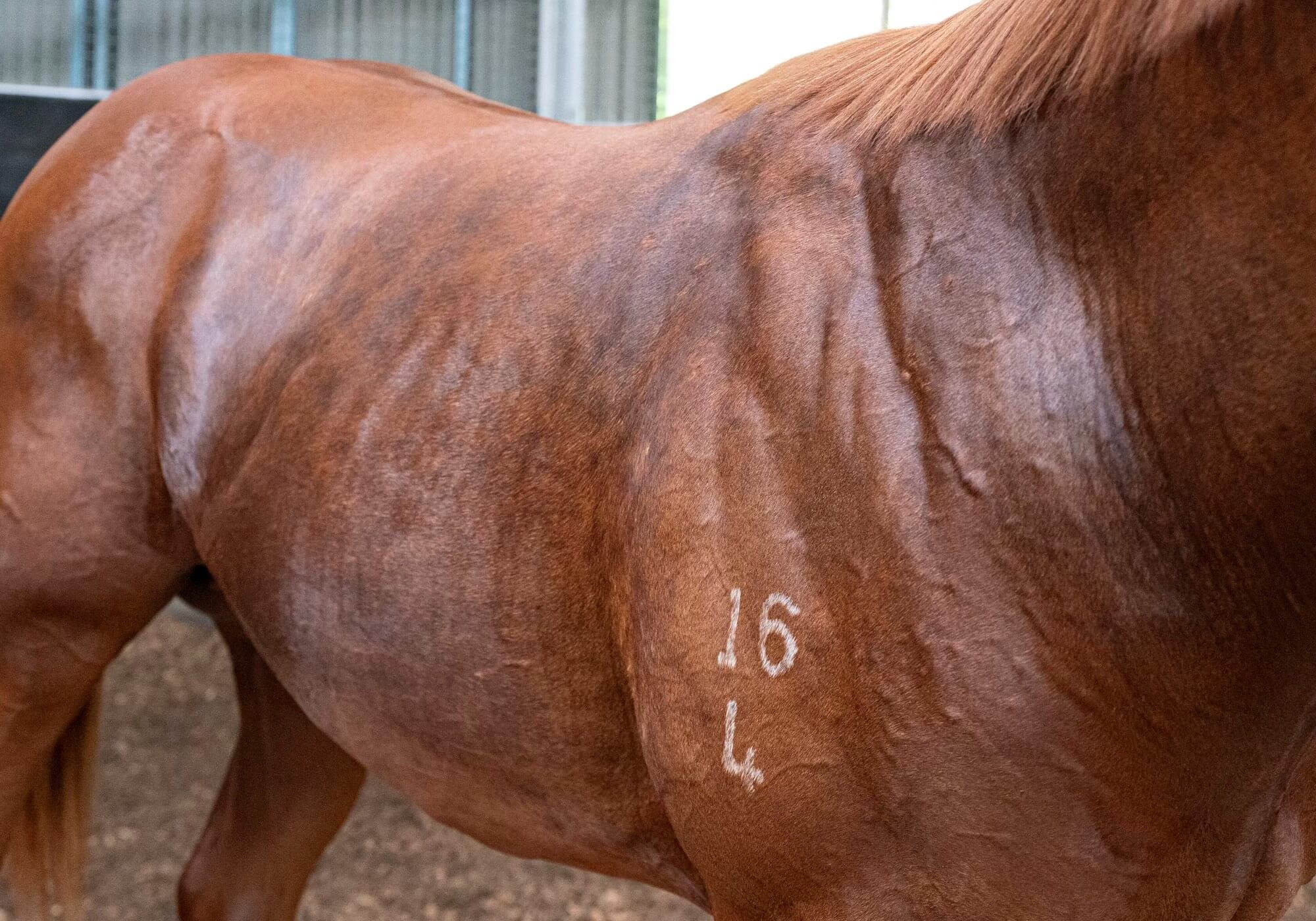
Photo credit: Debbie Holcombe.